
Wheatville, Austin, Texas · Est. 1869
Rev. Jacob Fontaine Gold Dollar Building
The last surviving structure of Wheatville — Austin's first Black community. A 150-year-old witness to freedom, faith, journalism, and the slow erasure of a people's home.
Wheatville, 1869
Austin's First
Black Community
In 1869, freedman James Wheat and his family established Wheatville on the western edge of what is now Austin's West Campus neighborhood. It was the first Black community associated with Austin after the Civil War — built on land the city considered marginal, on the outskirts of early Austin, north of what is now Martin Luther King Jr. Boulevard.
Wheatville stretched from 24th Street to 26th Street, with most residents living along San Gabriel and Longview Streets. It was a self-sustaining community — with churches, stores, and homes built by and for formerly enslaved people claiming their freedom.
Jacob Fontaine was one of Wheatville's most prominent residents. In 1870, he purchased the lot at 2400 San Gabriel Street — next door to the building that would bear the name of his newspaper.
Founded
1869
Wheatville, Austin
The Structure
Wood, Limestone,
and 150 Years of History
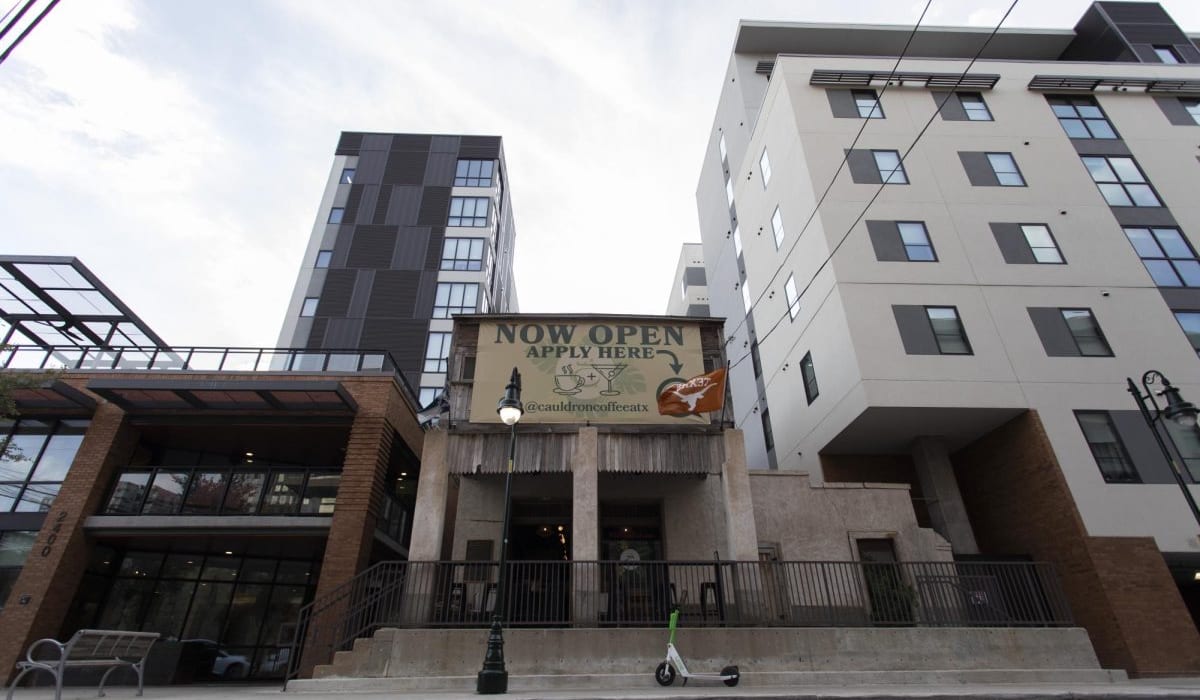
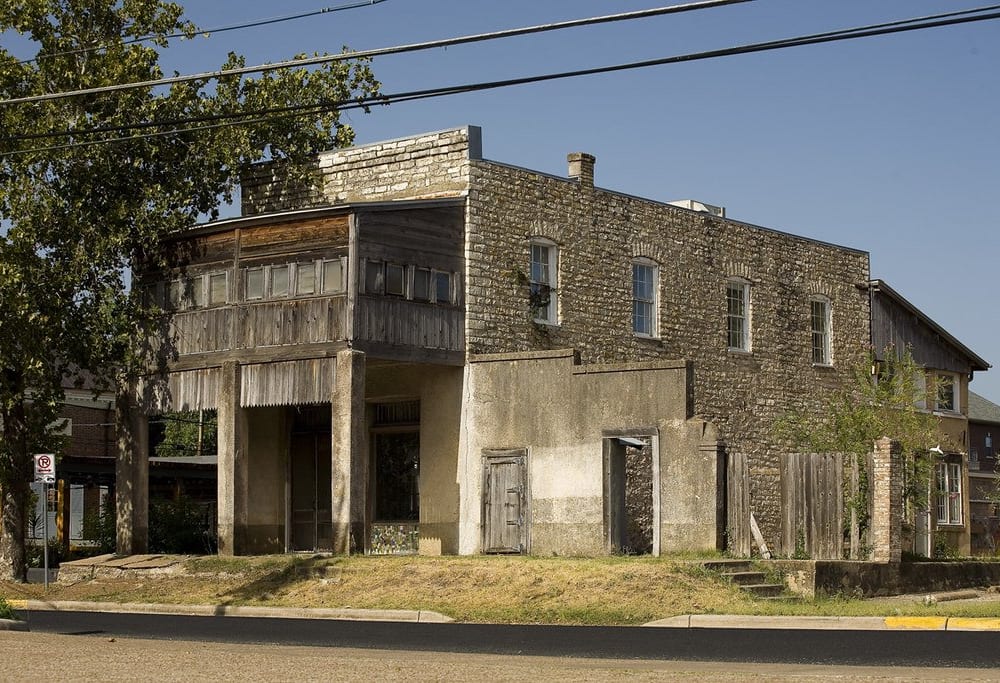
The Gold Dollar Building is a small, two-story structure of wood and limestone, nestled today in the center of HillTop apartments on the western edge of West Campus. Its first floor was likely built in 1869 by George Franklin, a Black carpenter — one of the founding structures of Wheatville.
Over 150 years, the building has housed a grocery store, a newspaper, a church, a laundromat, an ice cream store, and a barbecue restaurant. Today it is home to The Cauldron, a coffee shop and bar.
It is the last remaining structure from Wheatville — the sole physical survivor of Austin's first Black community, still standing amid the apartments and coffee shops of modern West Campus.
Setting the Record Straight
Jacob Fontaine Never Owned
the Gold Dollar Building
Despite common misconceptions, Jacob Fontaine was not the owner of the Gold Dollar Building. He owned the lot next door — 2400 San Gabriel Street — where he lived with his family from 1870 and from which he published the Austin Gold Dollar newspaper beginning in 1876.
The building took its name from his newspaper — a testament to how central Jacob's voice was to Wheatville's identity. He owned his lot until 1894, and records show him still listed as living there at the time of sale. His home was burned down in 1879, silencing the press. The building next door survived. His legacy did not depend on it.
"He started his newspaper with sixty dollars he earned from the investment of a gold dollar given to him in 1872 by his sister, Nelly Miller, when they were reunited in Mississippi after a separation caused twenty years before by slavery."
— Texas State Historical Association
A Chronicle
150 Years
of One Building
1869
Wheatville Is Founded
Freedman James Wheat and his family established Wheatville — the first Black community associated with Austin after the Civil War. Stretching from 24th to 26th Street along San Gabriel and Longview, it was built on land considered marginal by the city, on the outskirts of early Austin.
1869
The Building Is Constructed
The first floor of what would become the Gold Dollar Building was likely built by George Franklin, a Black carpenter, in 1869. The small two-story structure of wood and limestone stood at the center of Wheatville — a hub for commerce, community, and daily life.
1870
Jacob Fontaine Arrives in Wheatville
Jacob Fontaine and his family purchased the lot next door at 2400 San Gabriel Street in 1870. He was not the owner of the Gold Dollar Building — but he was its neighbor, and the heart of the community that surrounded it.
1872
A Single Gold Dollar
Jacob's sister Nelly Miller pressed a gold dollar into his hand when they reunited in Mississippi — their first meeting in twenty years, separated by the cruelty of slavery. Jacob kept it. He invested it.
1876
The Austin Gold Dollar
From his home at 2400 San Gabriel, with sixty dollars earned from the investment of that single gold dollar, Jacob Fontaine launched the Austin Gold Dollar — one of the first Black weekly newspapers in the South, and the first newspaper under Black ownership in Austin. It covered religion, education, racial justice, and family.
1879
The Press Is Silenced by Fire
Jacob's home — and with it the press — was burned down in 1879. The Gold Dollar may have continued in some form until around 1880, but the fire marked the end of its most active chapter. Jacob owned the lot next door until 1894.
1883–1928
Gentrification & Displacement
After UT Austin opened in 1883, the city expanded into areas traditionally owned by Black residents. Sororities and fraternities moved in, driving up costs. In 1928, Austin's city master plan pushed Black residents east of what is now I-35 — one of the first episodes of anti-Black gentrification in the city's history.
Today
The Last Structure Standing
The Gold Dollar Building — now home to The Cauldron, a coffee shop and bar — is the last remaining structure from Wheatville. In its 150-year history it has housed a grocery, a church, a laundromat, an ice cream store, and a barbecue restaurant. It stands today as the sole physical witness to Austin's first Black community.

What Was Lost
The First Episode of
Anti-Black Gentrification
After the University of Texas opened to students in 1883, the city began expanding into areas traditionally owned and populated by Black residents. Sororities and fraternities moved into Wheatville, driving the cost of living higher than longtime residents could afford. Historians describe this as one of the first episodes of anti-Black gentrification in Austin's history.
In 1928, Austin's city master plan deliberately pushed all Black residents out of their communities and into what is now East Austin — moving Black schools, parks, and segregated facilities east of East Avenue, now the I-35 highway. Wheatville was erased. Only the Gold Dollar Building remains.
Why It Matters
One Building.
An Entire Community's Memory.
150+
Years Standing
Built in 1869, the Gold Dollar Building has outlasted the community it served, the newspaper that named it, and the city plans that tried to erase it.
Last
Structure from Wheatville
Every other building from Austin's first Black community is gone. The Gold Dollar Building is the sole surviving physical witness to Wheatville's existence.
1st
Black-Owned Newspaper in Austin
The Austin Gold Dollar — published by Jacob Fontaine from next door — was the first newspaper under Black ownership in Austin and one of the first Black weeklies in the South.
Explore the
Full Legacy
The Gold Dollar Building is one chapter. Discover the churches, the community, and the full life of the man whose voice shaped Austin.